Mobile Game Onboarding: FTUE Best Practices for 2026
PGP Studio Team · July 20, 2026 · 8 min read
Players give a new game 2–3 minutes to prove its worth. The first-time user experience checklist we run against every title we publish.
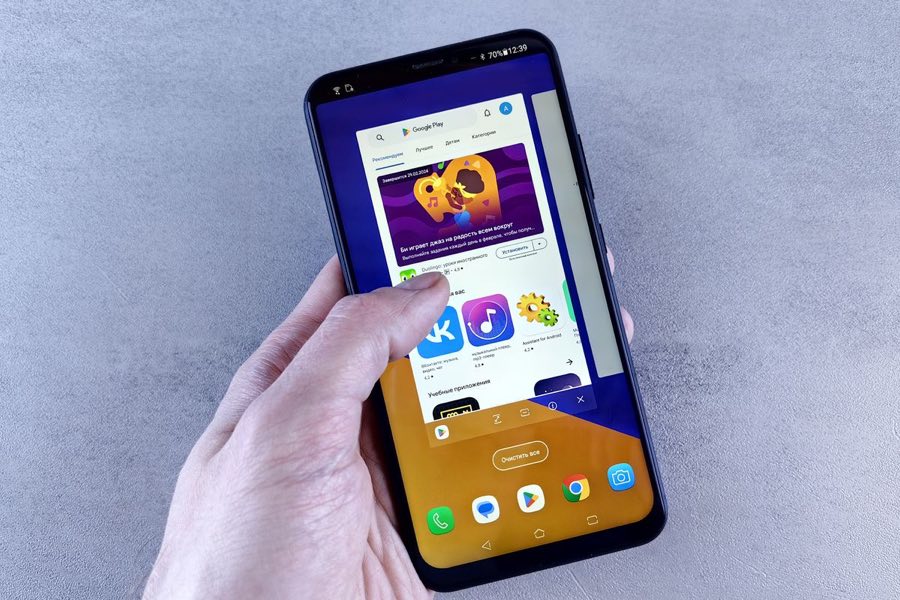
Mobile players give a new game roughly two to three minutes, sometimes less, to prove its value, and the first thirty minutes of play is widely cited as the real determinant of whether someone keeps playing or uninstalls. That is an unforgivingly short window for a genre where a studio might have spent months designing a core loop with real depth and long-term progression, and internalizing just how short that window actually is, rather than treating it as an exaggerated industry talking point, is the first and most important step in designing a first-time user experience that actually converts a curious download into a returning player.
Progressive Disclosure as the Core Design Principle
The core design principle behind a good first-time user experience is progressive disclosure: introduce one mechanic at a time as it is needed, instead of front-loading the full ruleset before the player has touched anything. This is worth unpacking beyond the label itself, because the failure mode it is guarding against is extremely common and easy to fall into without deliberately designing against it: a designer who has spent months living inside a game's full ruleset naturally wants a new player to understand and appreciate that same full ruleset as quickly as possible, and that instinct, explain everything up front so the player understands the whole system, is exactly backwards from what actually works. A brand new player does not yet have the context to absorb a complete ruleset presented all at once, and front-loading that information overwhelms rather than informs, actively working against the goal of getting a player to a satisfying first moment of actual play as quickly as possible.
Progress bars and checklists during onboarding are a reliable, measurable way to lift tutorial completion rates specifically because they give a player a concrete, visible sense of how much onboarding remains before reaching genuine free play, addressing a related but distinct anxiety from information overload: uncertainty about how long a mandatory onboarding sequence will last. A player willing to sit through a short, clearly-bounded tutorial sequence may abandon the exact same content if it is presented without any indication of length or progress, simply because the uncertainty itself, not knowing whether this is nearly done or just getting started, is its own source of friction independent of the actual content being taught.
The Near-Universal Rule About Ads During Onboarding
One rule shows up in nearly every 2026 FTUE guide without exception: do not show ads during the first-time experience. Interruption at this exact stage directly damages Day-1 retention, and Day-1 retention is the single number most tied to everything downstream, including revenue. This rule deserves more explanation than a simple prohibition, because the reasoning behind it clarifies why it holds so consistently across guides that otherwise disagree on plenty of other onboarding details. A player in their first few minutes with a new game is actively forming their initial judgment of whether this specific game respects their time and attention, and an ad interruption during that exact judgment-forming window reads as a strong, early signal that the answer is no, regardless of how reasonable the same ad placement might be once a player has already formed a positive relationship with the game later in their lifecycle.
That framing, ads are not universally bad, they are specifically bad during the trust-forming window, is a more useful mental model than a blanket no ads ever rule, since it explains why the exact same ad format that would be perfectly reasonable and well-tolerated after a player's first session becomes actively retention-damaging during the first few minutes specifically. The timing of the interruption, not simply its existence, is what determines the actual retention cost.
Applying This as a Standing Checklist, Not a One-Time Design Pass
We treat this as a standing checklist against our own first-session flow on every title we publish, from Diamond Block Puzzle Star Game to our newer releases, and the word standing is doing real work in that sentence: this is not a one-time design review conducted at a title's original launch and then considered permanently settled. Onboarding flows tend to accumulate small, individually reasonable additions over a title's post-launch lifecycle, a new tutorial step explaining a newly added feature, an additional progress checkpoint added to highlight a new system, and each individual addition can seem like a reasonable, isolated design decision at the time it is made, while the cumulative effect across several such additions over a title's lifetime can quietly turn a once-tight, well-paced onboarding sequence into a bloated one that no longer respects the same two-to-three-minute attention window that motivated the original design.
Re-auditing the full onboarding flow periodically, specifically checking total time-to-first-satisfying-moment and total ad-free window length against the same standards applied at original launch, rather than assuming a good onboarding design remains good indefinitely once shipped, has caught more than one instance in our own catalog where post-launch feature additions had quietly extended onboarding well past what the original, carefully-tuned design intended.
It's One of the Cheapest Retention Wins Available
It's one of the cheapest retention wins available, and one of the easiest to get wrong by accident, a pairing worth taking seriously rather than treating as a throwaway closing line. The cheapest part is genuinely true: unlike a deep content addition or a new core mechanic, improving onboarding pacing and removing unnecessary friction from the first few minutes of play typically requires reordering and pacing existing content and systems rather than building meaningfully new ones, which makes it a comparatively low-engineering-cost improvement relative to its retention impact. The easy to get wrong by accident part is equally true and less obvious: because onboarding sits at the very start of a player's experience, problems there are invisible to the existing player base and to the development team itself, who by definition already know the game and never experience their own onboarding flow with fresh eyes the way a genuinely new player does.
Why Internal Playtesting Alone Misses This Problem
That invisibility to the existing team is the specific reason we do not rely purely on internal playtesting to evaluate onboarding quality, and it is worth being explicit about why internal review alone is structurally unsuited to catching onboarding problems even when conducted carefully and in good faith. Every person on our own team already understands the game's core mechanics deeply, which means an internal reviewer cannot genuinely experience the onboarding sequence the way a real first-time player does, no matter how deliberately they try to view it with fresh eyes. We supplement internal review with genuinely fresh-eyes external testing specifically for onboarding evaluation, recruiting testers with no prior exposure to the specific title being tested, precisely because that structural blind spot cannot be designed around internally regardless of how disciplined the internal review process is.
What This Means for a New Title's Design Process From Day One
For any new title we scope going forward, first-time user experience design is treated as a first-class design deliverable from the earliest stages of production, not a polish pass conducted near the end of development once the core game is otherwise considered finished. Designing the first three minutes of a new player's experience with the same deliberate attention given to a title's core loop or its long-term progression systems, rather than treating onboarding as a smaller, secondary design task to be handled quickly once the more substantial systems are already built, is the single biggest process change we have made as a direct result of taking this specific piece of industry guidance seriously rather than treating it as a well-known but rarely-actually-prioritized best practice.
Measuring This Quantitatively, Not Just Qualitatively
Beyond the qualitative external testing discussed above, we track a specific set of quantitative onboarding metrics on every title: time to first meaningful action, tutorial completion rate, and Day-1 retention segmented specifically by whether a player completed or abandoned the onboarding sequence. That segmented Day-1 retention view has been the single most useful metric in this set, since it directly quantifies the retention cost of onboarding abandonment in a way that a completion-rate percentage alone does not, making the business case for onboarding investment concrete and specific rather than an abstract best-practice argument.
The Broader Principle This Reflects About Our Design Process
More broadly, treating first-time user experience with this level of quantitative and qualitative rigor reflects a principle we apply across our design process generally: the parts of a game's experience that are easiest for an experienced internal team to overlook, precisely because the team itself no longer experiences them as a genuinely new player would, deserve deliberately heavier external validation than the parts of the game the team naturally scrutinizes closely simply because they are the parts the team spends the most time thinking about during development.
Applying the Same Rigor to Returning-Player Re-Onboarding
A related but distinct scenario worth designing for deliberately is a lapsed player returning after a long absence, who needs a lighter-touch version of onboarding to re-orient themselves without repeating the full new-player sequence they already completed once. We now design an explicit, separate re-onboarding path for returning players distinct from the first-time new-player flow, since treating a returning player identically to a brand new one, forcing them through the same full sequence again, creates exactly the kind of unnecessary friction this whole piece has argued against, just at a different point in a player's lifecycle.
The Team Discipline That Makes This Sustainable
Sustaining this level of onboarding rigor across an entire catalog and over each title's full multi-year lifecycle requires more than a one-time design decision at launch; it requires a standing team habit of questioning the first few minutes specifically every time a meaningful feature gets added, rather than assuming a previously validated onboarding sequence remains valid indefinitely once shipped. We have built that specific questioning habit directly into our own feature release checklist: any new feature addition prompts an explicit question during review, does this change what a first-time player experiences in their first three minutes, and if so, has that specific change been tested with fresh external eyes rather than assumed safe based on the original onboarding design's past validation. That single review question has become one of the most consistently valuable habits in our entire development process, precisely because it forces the team to keep re-examining the one part of the game experience that is otherwise structurally the easiest to stop noticing. We hold ourselves to this same standard on every future title regardless of genre, since the two-to-three-minute window this entire piece is built around does not become more forgiving just because a specific game happens to have a more experienced or more patient design team behind it. Every title we have shipped under this standard has earned that trust the same way: not through a single clever onboarding trick, but through the same unglamorous, repeatable discipline of measuring, testing with fresh eyes, and refusing to assume last year's validated design is still valid this year without checking again.
A great first minute can't rescue a mechanic that doesn't hold up, which is exactly why onboarding review is inseparable from the genre-level design choices in our How Block Puzzle Games Are Designed piece. It's a standard part of the development process we run on every title before launch.
Need design help for your next title?
This exact design discipline is what shapes every game in our published catalog.
Play Our Games