How to Choose a Unity Game Development Company in 2026: The Complete Buyer's Guide
PGP Studio Team · July 28, 2026 · 14 min read
A practical, no-fluff framework for evaluating Unity game development companies: the questions to ask, the red flags to watch for, and how engagement models and pricing actually work.

Hiring a Unity game development company is a bigger decision than most founders and studio leads treat it as. It isn't just a vendor selection, it's choosing who controls your build pipeline, your IP handoff, and your timeline for the next several months. Get it right and you ship on schedule with code you fully own. Get it wrong and you're looking at a rebuild, a blown budget, or a codebase so tangled that the next developer refuses to touch it. This guide is written from the other side of that decision, by a studio that ships its own Unity titles and takes on client Unity and XR work, not by a marketplace that just wants you to submit a lead form.
What "Unity Game Development Company" Actually Means
The phrase gets used loosely, and that looseness is exactly what makes vendor selection risky. At one end, you have solo freelancers working from Unity Asset Store templates, capable of a quick prototype but not a production-grade, store-ready build. At the other end, you have full-service studios that handle design, engineering, backend, QA, store submission, and post-launch support as one accountable team. In between sit outsourcing brokers who subcontract the actual work to a third party you never see or vet directly.
None of these are automatically wrong for every project. A freelancer might be exactly right for a two-week prototype you're using to pitch investors. But if you're building a title meant to generate real revenue, ship on Google Play or the App Store, and stay maintainable for years, you need a company with a demonstrable production pipeline: version control discipline, a QA process that isn't "the developer plays it once," and a track record of titles that are actually live, not just rendered in a portfolio deck.
The Real Cost of Getting This Decision Wrong
The visible cost of a bad hire is the invoice. The real cost is almost always larger and less visible: a codebase built without object pooling or a sane scene structure, discovered only when your player count grows and frame rates start dropping on mid-range Android devices. A monetization integration bolted on without regard for retention, discovered only when day-7 numbers come in low. A vendor who goes quiet three weeks before a planned launch, discovered at the worst possible time.
None of this is hypothetical scaremongering designed to sell you a safer option. It's the standard failure pattern in outsourced software work generally, and Unity projects are not exempt from it just because games feel like a more forgiving medium than enterprise software. A rebuild costs more than the original build, both in money and in the calendar time a competitor gets to use while you're re-doing work that should have been done once.
Six Questions to Ask Before You Sign Anything
1. Can I see live, shipped titles, not just renders?
A rendered mockup or a private Unity Editor screen recording proves nothing about production discipline. Ask for links to live Google Play or App Store listings and check the published developer name against the company. If every example in a portfolio is unpublished, treat that as an open question, not a settled one.
2. What engagement model fits my project, and why?
A vendor who pushes a single engagement model regardless of your project shape is optimizing for their own convenience, not your outcome. A good answer explains the trade-offs of fixed price, dedicated team, and time-and-material against your specific scope, not a generic sales pitch for whichever one they always sell.
3. Who owns the code and assets when the project ends?
This should be an unambiguous, one-sentence answer: full transfer, no retained rights, no licensing fees. If the answer involves hedging, a retained-rights clause, or "we'll discuss that later," walk away. IP terms get harder to renegotiate after the relationship has started, not easier.
4. What does post-launch support actually include?
A shipped build isn't a finished product; live games need crash monitoring, OS and store-policy compliance updates, and iteration based on real player data. Ask specifically what's included after launch and what triggers an additional cost, rather than accepting a vague "we're here if you need us."
5. How will we communicate, and across what time zones?
For a remote engagement spanning continents, this matters more than almost anything else on this list. Ask for specifics: which tools, what cadence, what overlap hours you can expect for a stand-up or a blocking question. A studio that has genuinely supported international clients before will have a concrete, rehearsed answer here, not an improvised one.
6. Does their technical stack actually match what I'm building?
A studio whose entire portfolio is 2D hyper-casual puzzle games can absolutely be the right fit for another 2D hyper-casual puzzle game, and the wrong fit for a multiplayer 3D shooter or a Vision Pro spatial app. Match the stack to the brief before you match the price.
Red Flags in a Unity Development Company's Portfolio
Some warning signs are consistent enough across the industry to call out directly. A portfolio built entirely from Unity Asset Store starter kits with minimal customization is one: it demonstrates the ability to assemble a template, not the ability to engineer a custom system. A total absence of any live store listing after years of claimed operation is another. Evasiveness on IP terms, discussed above, is a third. And a quote that's dramatically below every other quote you've received for the same scope is worth extra scrutiny rather than automatic celebration, since the gap usually gets recovered later through scope disputes or corners cut in QA.
One more diligence step worth the extra day it takes: ask to speak directly with a past or current client, not just read a written testimonial. A written quote on a website can be edited or selectively chosen; a short call with a reference who has actually managed the relationship day to day surfaces details, communication habits, how disputes got resolved, whether deadlines slipped, that never make it into marketing copy. A vendor confident in its own delivery record will arrange this without hesitation.
Engagement Models Explained: Fixed Price, Dedicated Team, or Time & Material
Most Unity development companies, including ours, offer some version of these three models, and understanding the trade-offs helps you push back on a vendor's default recommendation if it doesn't fit. A fixed-price project locks a defined scope against a defined budget, delivered milestone by milestone; it suits an MVP or a single deliverable with a genuinely stable brief. A dedicated team embeds a senior developer, or a full squad, directly into your workflow and repo, billed on an ongoing basis; it suits a roadmap that will keep evolving after the first release. Time-and-material is a flexible, sprint-based arrangement best suited to LiveOps, ongoing content updates, or a codebase that needs continuous iteration rather than a single delivery date. Our own breakdown of these three models, including where each one has failed to fit a specific project shape, is on the hire a Unity developer page, alongside the current pricing bands for each.
What a Production-Ready Unity Studio's Tech Stack Should Cover
The specific stack matters less than whether it's coherent and matched to your target platforms. At minimum, expect fluency in Unity's Universal Render Pipeline for mobile and cross-platform performance work, and High Definition Render Pipeline where visual fidelity is the priority. For anything beyond a single mobile SKU, ask about cross-platform build and testing discipline across Android, iOS, and WebGL, since a build that only gets tested on one target platform tends to surface expensive surprises on the others late in development.
If multiplayer or a live backend is anywhere in your roadmap, even a future phase, ask now whether the studio has real production experience with Photon, Mirror, Firebase, or PlayFab, rather than assuming any Unity generalist can pick this up cleanly mid-project. The same applies to XR: AR Foundation and OpenXR experience is a genuinely different skill set from mobile Unity development, and a studio without it will be learning on your project's timeline and your budget. We cover our own stack, including where we draw the line on what we take on directly versus scope out, on the technologies page.
Choosing a Remote Unity Partner from the US, UK, Canada, Australia, or Europe
A large share of the demand for outsourced Unity development now comes from studios and founders in the US, UK, Canada, Australia, and across Europe, hiring remote teams to control cost without sacrificing production quality. The practical concerns are consistent across all of these markets, and they're rarely the ones that get asked about first. Time zone overlap is a real constraint, but it's solvable with an async-first communication process and a few hours of daily overlap for stand-ups or blocking decisions, not a requirement for identical working hours.
IP jurisdiction and contract enforceability deserve more attention than they usually get. A mutual NDA signed before any technical discussion, and a contract that states plainly which jurisdiction governs the agreement, protects both sides regardless of where either party is based. Payment structure is the other practical detail worth settling early: milestone-based payment for fixed-price work, or a recurring billing cycle for dedicated-team and time-and-material engagements, agreed on in writing before work starts rather than negotiated after the first invoice comes due.
None of this is unique to hiring from India specifically. It's the same due diligence you'd want to run on any remote vendor regardless of geography; the difference is that a studio that has actually done this before, across multiple regions, will have a rehearsed, specific answer instead of an improvised one, which is itself a useful signal about how the rest of the engagement will run.
Why Studios and Founders Choose PGP Studio
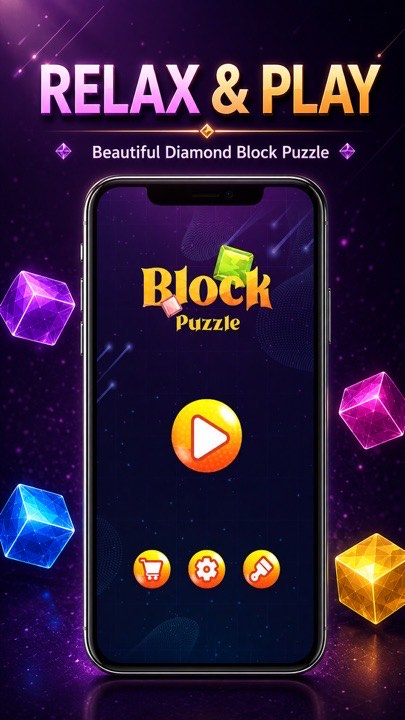
We're a Unity and XR development studio based in Ahmedabad, India, and we publish our own catalog of Unity mobile games on Google Play alongside client Unity and XR work, which means every developer on a client engagement has shipped production Unity code on our own titles, not just tutorials or unpublished demos. Our flagship title, Diamond Block Puzzle Star Game, carries a 5.0-star rating and over 5,000 organic downloads, achieved through the same profiling and optimization process we run on every build; the full technical breakdown of how we got there is documented on our case studies page with real, verifiable numbers rather than a marketing summary.
Every engagement starts with a mutual NDA before any technical discussion, and transfers full source code and IP ownership on final payment, with no retained rights and no licensing fees. We work async-first with overlapping-hours stand-ups for dedicated-team engagements, and have supported clients across US, UK, European, and Australian time zones without friction. If you want the full story of how we work and who's behind it, that's on our about page; if you want to see the actual games, they're on our games page, live on Google Play, not behind a login wall.
How to Read and Compare Quotes That Don't Look Alike
Ask three Unity development companies for a quote on the same brief and you'll typically get three numbers that aren't actually comparable, because each vendor has scoped a slightly different deliverable. The lowest number in a set of quotes is worth a specific question before it's worth celebrating: what exactly is excluded. A quote that looks 30% cheaper than the others often turns out to exclude QA passes across device tiers, store submission and compliance handling, or a defined bug-fix window after launch, all of which get billed separately once the project is underway.
The more useful comparison isn't the bottom-line number, it's the per-milestone breakdown behind it. A vendor who can show you what each milestone payment actually buys, in concrete deliverables rather than vague phase names like "development" or "polish," is giving you a real basis for comparison. A vendor who resists breaking the number down, or presents a single lump sum with no milestone structure at all, is making it harder for you to catch scope gaps until they surface as change orders mid-project.
Warranty Periods and What Happens After Launch Day
A shipped build is the start of a live product's lifecycle, not the end of the engagement, and this is where a lot of otherwise-reasonable contracts get vague. Ask specifically whether a bug-fix or warranty window is included after launch, and how long it runs, since crash reports and device-specific edge cases reliably surface in the first few weeks of real-world usage in a way no amount of pre-launch QA fully catches. A defined 30- to 60-day warranty window covering launch-blocking bugs at no additional cost is a reasonable standard to ask for in writing, distinct from ongoing feature work or LiveOps, which is properly a separate, priced engagement.
A Practical Evaluation Checklist
- Live, verifiable store listings for at least two or three shipped titles
- A clear, unhedged answer on IP and source code ownership
- An engagement model recommendation that's justified against your specific scope, not a default pitch
- A concrete post-launch support offering, not a vague promise
- A specific, rehearsed communication process for time zone overlap
- A tech stack that genuinely matches your platform targets, including any future phases you've already scoped
None of these six checks take more than a single discovery call to run through, and a studio worth hiring will answer all of them directly, without deflection. The studios that hedge, delay, or redirect the conversation back to price before addressing ownership and process are telling you something important about how the engagement itself will go.
If you're further along and specifically comparing the cost of hiring against building an internal team, our Unity game development cost guide breaks down real pricing bands by project type, and our in-house versus outsourced decision framework covers the trade-offs beyond price alone. Whichever stage you're at, we start every conversation the same way: a free scoping call, not a sales pitch.
Choosing a Unity game development company is ultimately a bet on execution discipline you can't fully verify until the project is underway, which is exactly why the diligence above matters more than the sales deck. Ask the six questions, run the checklist, and weight the answer to the IP and communication questions more heavily than the initial quote. A cheaper vendor who can't answer either one clearly is very rarely the cheaper option once the real cost of the engagement plays out.
Ready to Talk About Your Project?
If you're evaluating Unity development partners for a mobile, PC, WebGL, or XR build, we'll give you a straight answer on scope, timeline, and engagement model in a single scoping call, not a follow-up sales sequence. Book a free consultation or explore our hiring models and current pricing to see if we're the right fit before you commit to anything.
Frequently Asked Questions
How do I verify a Unity game development company actually built the games in its portfolio?
Ask for the live store listings (Google Play or App Store) for at least two or three titles, then check the developer name on the listing against the company you're evaluating. A studio confident in its own work will hand you links immediately; hesitation or a portfolio built entirely from unpublished mockups is a real warning sign.
What is a normal timeline for a Unity game development project?
A hyper-casual prototype typically takes four to six weeks. A full mobile or PC title with monetization, analytics, and store-ready polish usually runs ten to sixteen weeks. Multiplayer, XR, and enterprise simulation projects are scoped individually because hardware and networking requirements vary too much for a fixed range.
Should I choose a fixed-price project or a dedicated team?
Fixed price works best when your scope is genuinely locked and you want a predictable budget for an MVP or a single deliverable. A dedicated team fits better when the roadmap will keep evolving after launch, since you're paying for ongoing capacity rather than a single milestone.
Do I own the source code after the project is finished?
You should, unconditionally. Full IP and source code transfer on final payment, with no retained rights or licensing fees, is the standard any serious Unity development company should meet. If a vendor is vague about this in writing, treat it as a deal-breaker rather than a detail to sort out later.
Can a Unity development company in India work effectively with clients in the US, UK, or Australia?
Yes, and it's now the norm rather than the exception for remote game development. The practical requirements are async-first documentation, overlapping-hours availability for at least a few hours a day, and a contract that clearly states IP jurisdiction and payment terms up front, not time zone proximity.
Have a Unity or XR project in mind?
Tell us what you're building and we'll come back with a scoped plan, not a sales pitch.
Start Your Project