EU Digital Markets Act in 2026: Alternative App Stores and What They Mean for Game Publishers
PGP Studio Team · July 15, 2026 · 8 min read
Epic's iOS store, AltStore PAL, and ONE Store are live in the EU. Is it worth the extra listing effort for a small studio yet?
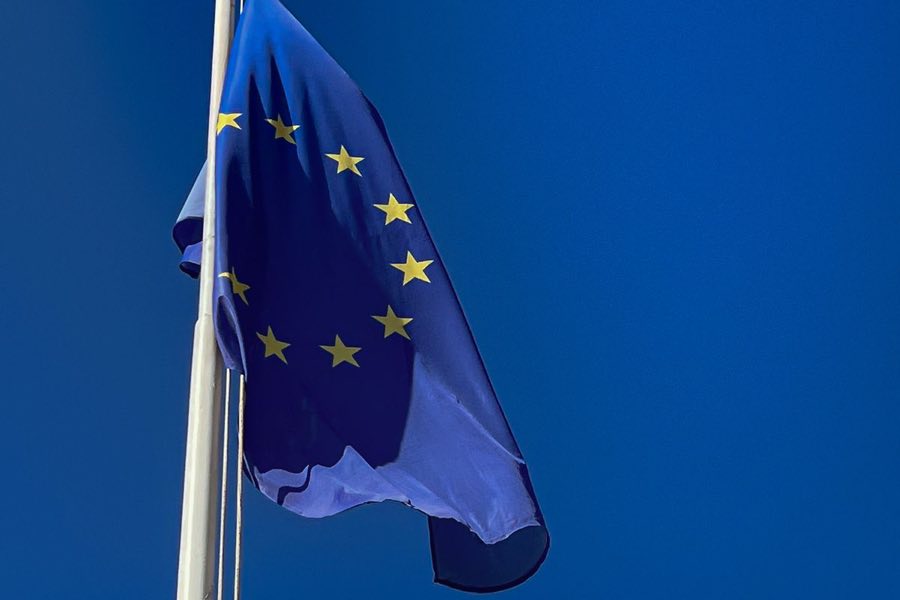
The Epic Games Store launched its alternative iOS app store in the EU back in August 2024, and by 2026 continues distributing titles like Fortnite, Rocket League Sideswipe, and Fall Guys there. AltStore PAL, co-created by developer Riley Testut, is funded by an Epic MegaGrant that covers Apple's Core Technology Fee, making it free for EU users; Epic also backs Aptoide's iOS store and ONE Store on Android. Two full years into this alternative distribution experiment, there is now enough real track record to evaluate honestly whether the DMA's alternative app store mandate has actually reshaped mobile distribution in the EU the way its strongest advocates predicted, rather than relying purely on the theoretical case for or against it.
Notarization: The Middle Ground Apple and the EU Landed On
Apple still performs notarization, security and malware scanning, on every app distributed through these alternative stores, even though full App Review content rules no longer apply to them. This detail is genuinely important context that gets lost in a lot of more polarized coverage of this policy: the DMA did not force Apple to abandon all security oversight of iOS app distribution, it forced Apple to separate security notarization from the broader, more subjective content and business-model review that has historically been bundled together under the single App Review process. That separation, security scanning remains mandatory, but the more subjective business-model and content policy review does not extend to alternative store distribution, is the actual compromise both sides landed on, and understanding that specific split is more useful than either an unqualified this changes everything or an unqualified this changes nothing framing of the policy's real impact.
The Geographic Restriction That Limits the Experiment's Reach
As of 2026, access is still restricted to users with EU or Japan Apple ID accounts physically located in those regions, DMA-style access expanded to Japan in January 2026. That geographic restriction is worth dwelling on because it directly caps how meaningful a signal this two-year experiment actually provides about global appetite for alternative app store distribution: a policy experiment confined to EU and Japan users specifically tells us something real about behavior in those markets under those specific regulatory conditions, but it does not necessarily generalize cleanly to a hypothetical scenario where the same alternative distribution option was available globally, since the EU and Japan markets have their own specific regulatory history and consumer behavior patterns that may not transfer directly to other markets.
Not Every Bet Here Is Surviving
Not every bet in this space is surviving, and that is itself an important data point often missing from coverage that treats alternative app stores as a uniformly successful disruption of Apple's traditional distribution model. MacPaw's Setapp announced it would sunset Setapp Mobile on February 16, 2026, a genuine shutdown of an alternative distribution attempt rather than a growth story, and it is worth taking seriously as evidence that simply having regulatory permission to operate an alternative store does not guarantee commercial viability. Building and operating an alternative app storefront carries real ongoing costs, security notarization coordination with Apple, marketing to build user awareness of an option most iOS users have never had reason to consider before, and infrastructure costs that do not disappear just because App Store's traditional revenue share no longer applies, and not every entrant into this space has found a sustainable path covering those costs.
Reading the Winners and the Losers Together
Reading the Epic Games Store's continued operation and title lineup alongside Setapp Mobile's shutdown together gives a more accurate picture of this market's actual state than looking at either data point in isolation. Epic entered with an existing, large, cross-platform user base already familiar with the Epic Games Store brand from PC and console distribution, plus deep pockets to fund the Core Technology Fee coverage that makes AltStore PAL free for end users, essentially subsidizing the ecosystem to build usage momentum before it needs to be self-sustaining on a standalone basis. A smaller entrant without that kind of existing brand recognition and financial runway faces a considerably harder path to building the user awareness and adoption needed to make an alternative storefront commercially viable within a reasonable timeframe, and Setapp Mobile's shutdown is a real, concrete illustration of exactly that harder path playing out unsuccessfully for one specific entrant.
What This Means for a Small Studio Right Now
For a studio our size, the honest read is that it is not premature to be aware of this landscape; understanding which alternative stores exist, how they operate, and what their actual track record looks like is genuinely useful context for any future distribution planning conversation, particularly if EU market performance becomes a larger priority for our catalog than it currently is. But it is premature to prioritize alternative-store listings over Google Play and the App Store; the audience reach isn't there yet to justify the extra submission overhead for a small catalog, a conclusion the two years of real data reviewed here supports rather than undermines. Even Epic's well-funded, well-known alternative store, with a genuinely popular title lineup, represents a small fraction of iOS distribution reach in the EU relative to the traditional App Store, and a smaller studio without Epic's existing brand recognition and financial resources would see an even less favorable reach-to-effort ratio from the same investment.
When This Calculus Would Actually Change
The specific development that would change this calculus for us is not simply more alternative stores launching, since more entrants without meaningfully more aggregate reach does not shift the underlying reach-versus-effort tradeoff in any studio's favor. What would change our recommendation is evidence of a specific alternative store reaching a genuinely meaningful share of EU iOS users, comparable to a real percentage point of total addressable EU iOS distribution rather than a rounding error, since that is the threshold at which the extra submission and maintenance overhead of supporting an additional storefront starts to pay for itself in incremental reach. We have not seen evidence of any current alternative store crossing that threshold as of 2026, Epic included, and until that changes, our recommendation to prioritize Google Play and the traditional App Store above any alternative distribution channel stands.
Our Ongoing Monitoring Approach
We revisit this specific assessment roughly every six months as part of our broader platform and distribution strategy review, since a two-year-old, slow-moving regulatory experiment can still shift meaningfully within a shorter window if a specific alternative store achieves a genuine breakout moment, a major exclusive title launch, a significant marketing push, or a policy change that meaningfully lowers the operating cost for smaller entrants than the current landscape allows. Absent a specific triggering event of that kind, though, the current data supports staying focused on the two dominant, already-proven distribution channels rather than spreading a small catalog's limited submission and marketing effort across an alternative distribution landscape that has not yet demonstrated the reach to justify that investment.
The Consumer Side of This Story, Not Just the Developer Side
Most of this analysis has focused on the developer and distribution side of the DMA's alternative store mandate, but it is worth briefly noting the consumer adoption side as well, since ultimately a store's viability depends on real user adoption, not just developer willingness to list on it. Consumer awareness and adoption of alternative iOS app stores in the EU remains modest relative to the traditional App Store two years in, which is itself informative: regulatory permission to offer an alternative does not automatically translate into meaningful consumer behavior change, particularly when the existing default option, the traditional App Store, continues functioning exactly as it always has for the large majority of users who have never had a specific reason to seek out an alternative.
Our Position on Revisiting This as the Landscape Shifts
We hold this specific assessment loosely rather than treating it as a permanent conclusion, precisely because regulatory landscapes and platform economics in this space have shown real capacity to shift meaningfully within a year or two, as this entire DMA alternative-store story itself demonstrates. Our standing practice is to revisit platform and distribution strategy assessments like this one on a fixed schedule rather than only when a dramatic news event forces the question, since the more gradual, less headline-worthy shifts in adoption data are exactly the kind of signal that is easy to miss without a deliberate, scheduled check-in.
A Note on Regulatory Precedent Beyond the EU
Beyond the direct EU and Japan market impact, this policy is worth watching as a potential regulatory precedent that other jurisdictions may look to when considering their own app store competition rules. If a similar mandate were adopted in a considerably larger market, the calculus around alternative store investment could shift meaningfully, and we track regulatory developments in other major markets specifically for early signals of similar mandates being considered, since that is the kind of development that would most directly change our current recommendation to deprioritize alternative store investment.
What a Genuine Breakout Would Actually Look Like
To make our own monitoring criteria concrete rather than vague, the specific signal that would move us to actively reconsider alternative store investment is a single alternative storefront demonstrably reaching double-digit percentage market share of EU iOS active installs, sustained across at least two consecutive quarters rather than a single temporary spike tied to one exclusive title's launch. Nothing currently in the public data we track approaches that threshold, and until it does, our recommendation to a studio our size remains to monitor this landscape as background context rather than as an active near-term distribution priority. In the meantime, our engineering and marketing effort stays concentrated on the two channels with proven, overwhelming reach, and we treat any time spent monitoring the alternative store landscape as a small, ongoing background research cost rather than an active distribution investment competing for the same resources as our core Play Store and App Store work. We will publish an updated version of this analysis if and when any alternative store's adoption data crosses the threshold we have described here, and until that happens, this remains our settled, actively-monitored position rather than a permanent, unrevisited conclusion. Until that threshold is met, we would rather spend the equivalent effort deepening our presence on the two channels that already reach the overwhelming majority of our actual audience than splitting attention across a landscape that, two years in, has yet to prove it deserves equal billing. A distribution strategy built on real, current adoption numbers rather than on regulatory permission alone has served us well here, and we see no reason to abandon that same discipline just because a new channel happens to be technically available now. That discipline, real numbers over regulatory permission alone, is the same one we apply everywhere else in this business, and we see no reason this specific decision should be the exception.
Our Google Play Developer Verification 2026 coverage tracks the other side of this same distribution-policy landscape. Knowing the rules before they change a studio's plans is standing advice on every client engagement we take on.
Want a second opinion on your own Play Store listing?
This is the same kind of outside review we run on our own titles before every launch.
Start a Conversation