Vision Pro vs Quest in 2026: Where XR Development Actually Pays
PGP Studio Team · May 8, 2026 · 8 min read
Fewer visionOS titles, nearly 3x the revenue per app. What the 2026 headset numbers mean for where you build first.
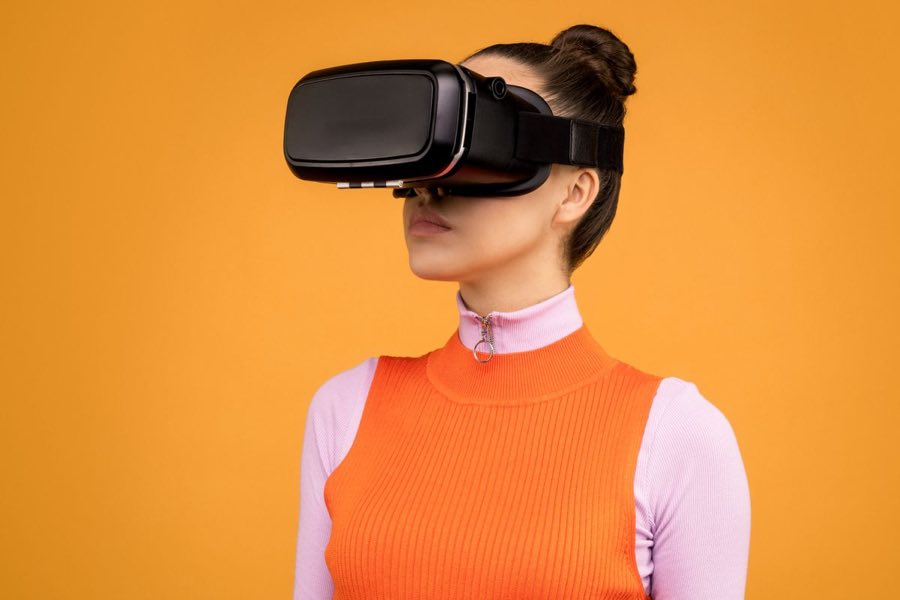
The XR hardware landscape settled into a genuinely clear split in 2026, and it is a split that matters directly for how a studio scopes an XR project rather than being an abstract industry-watching curiosity. Meta kept the Quest line aggressively priced, with the 256GB model at $399, and the Horizon OS platform now hosts more than 4,200 active titles. Apple's Vision Pro 2 launched in January at $2,499, a 30 percent lighter build than the original with an M4 Pro chip inside, but the visionOS catalog sits at roughly half of Quest's scale, around 2,100 titles. Two very different bets on the same underlying technology, and the numbers behind each bet tell a more useful story than the headline specs do.
The Revenue Gap Is the Number That Actually Matters
Catalog size alone would suggest Quest is the obviously larger opportunity, and in terms of raw reach it is. But the revenue-per-app numbers flip the story in a way that changes which platform makes sense depending on what a studio is actually optimizing for. In February 2026, the average visionOS app generated roughly $14,800 in net revenue, nearly three times the $5,100 average on Quest 3S. That is not a small gap; it is close to a 3x difference in average monetization per app on a smaller, more expensive platform versus a larger, cheaper one.
The intuitive explanation holds up under scrutiny: a $2,499 headset self-selects for an audience with meaningfully higher discretionary spend and, likely, higher willingness to pay for premium content once they have already made that initial hardware investment. A Quest buyer at $399 is closer to a mainstream consumer purchase decision, comparable to a mid-range game console, while a Vision Pro 2 buyer at $2,499 is making a purchase decision closer to a premium electronics category, and that difference in buyer psychology appears to carry through directly into in-app spending behavior once they own the device.
Meta's Content Strategy Shift Changes Who Should Build on Quest
The more structurally significant move underneath these numbers is Meta shutting down three of its own first-party game studios in January 2026, moving explicitly toward a third-party-first content model for Horizon OS rather than continuing to fund first-party flagship titles as the platform's primary content driver. Read correctly, that is not Meta retreating from gaming as a strategic priority. It is Meta betting that volume and reach, delivered through third-party developers, is a more efficient way to fill out the platform's catalog than continuing to fund expensive first-party productions internally.
For an external studio, that shift is directly relevant, and arguably a genuine opportunity rather than just a piece of industry news. A platform holder deliberately stepping back from first-party competition and leaning harder on third-party developers to fill the catalog usually means more discoverability support, more platform-level promotion for third-party titles, and less risk of a first-party title from the platform holder itself competing directly against yours for the same discovery real estate. If Quest is the platform you are building for, this specific structural shift is worth factoring into how much you expect the platform itself to help with discovery relative to a year or two ago.
Framing the Decision Around Reach Versus Revenue, Not Just Specs
The practical framework we use with clients scoping an XR build is deliberately simple, because the underlying decision genuinely is simple once you strip away the hardware spec comparisons that dominate most coverage of this topic. Quest is the larger, cheaper-to-reach audience, with a content strategy now actively favoring third-party developers for discoverability. Vision Pro is the smaller, meaningfully better-monetizing audience, and increasingly the platform enterprises are actually purchasing hardware for, which matters specifically for any client brief that includes an enterprise or training-simulation use case rather than a pure consumer game.
Neither platform is objectively the correct choice in the abstract; the correct choice depends entirely on what a specific project is optimizing for. A consumer-facing casual or social XR experience aiming for the largest possible install base, with monetization built around volume rather than premium per-user spend, points toward Quest. A premium, narrower-audience experience where a smaller number of high-intent, higher-spending users is the actual target, or where an enterprise buyer is footing the hardware cost rather than an individual consumer, points toward Vision Pro. We have that conversation explicitly with every XR client before writing a line of code, because building for the wrong audience profile on the right technical platform is a more common and more costly mistake than picking the technically weaker engine.
What This Means for Cross-Platform Scoping
A meaningful share of client briefs we see do not actually require an exclusive platform commitment upfront, and the honest recommendation in that situation is usually to architect for cross-platform reach from day one rather than picking a single target and hoping the other platform's differences stay manageable later. Unity's XR toolchain supports both platforms from a largely shared codebase, and the incremental cost of keeping a project portable across Quest and visionOS early in development is considerably lower than retrofitting portability into a project that was built with hardcoded assumptions about one specific platform's input model or performance envelope.
That said, cross-platform does not mean identical. Interaction models, input expectations, and performance budgets differ enough between Quest's controller-and-hand-tracking model and Vision Pro's eye-and-hand-tracking-first interaction paradigm that a genuinely good experience on both platforms needs platform-aware interaction design, not just a single interaction scheme ported unchanged across both. We scope that distinction explicitly with clients rather than letting 'cross-platform' quietly become 'built for one platform and awkwardly adapted for the other after the fact,' which is the outcome that actually damages a launch on whichever platform gets the adapted, secondary treatment.
Our Read Going Into the Next Hardware Cycle
The revenue-per-app gap between the two platforms is worth watching over the next year specifically for whether it narrows as visionOS's catalog grows toward parity with Quest's, or whether it persists as a structural feature of the premium-hardware, premium-spending-audience dynamic Vision Pro appears to have established. If the gap persists even as the catalog grows, that is a stronger signal that Vision Pro's audience genuinely behaves differently rather than the gap being an artifact of an early, self-selecting adopter base that will normalize as the platform matures.
For our own XR practice, the practical takeaway is to keep scoping conversations platform-agnostic by default, get explicit about reach-versus-revenue tradeoffs early with every client, and resist the temptation to treat either platform's current numbers as a permanent fact rather than a snapshot of where a genuinely fast-moving market happens to sit in 2026.
A Third Consideration: Development Cost, Not Just Audience Reach
Reach and monetization are the two axes most coverage of this comparison focuses on, but development cost is a third variable worth factoring into the same decision, and it does not always point the same direction as reach or revenue alone would suggest. Building and testing for Vision Pro currently requires access to genuinely expensive hardware across a small team, at $2,499 per unit, in a way that testing for Quest at $399 per unit does not. For a small studio or an early-stage client without an existing hardware fleet, that upfront cost difference is a real budget line item, not just a rounding error, and it is worth surfacing explicitly during project scoping rather than assuming hardware costs are a footnote relative to development labor.
We factor this directly into client budget conversations: a Vision Pro-first build often needs a smaller device testing fleet by necessity (fewer physical units budgeted, more careful scheduling of who has hardware access when) compared to a Quest-first build, where the lower per-unit cost makes it easier to keep two or three devices on hand across a whole team without a significant budget conversation. That operational difference shapes how we plan testing schedules on Vision Pro projects specifically, not just how we plan the build itself.
The Input Model Difference Nobody Scopes For Up Front
Reach and revenue dominate how this decision gets discussed, but the two platforms diverge just as sharply on the actual development side, and it is the divergence we see most often left out of a client's initial scoping conversation. Quest's interaction model is still fundamentally controller-first, with hand tracking as a well-supported but secondary input path; Vision Pro flips that entirely, shipping controller-free with eye tracking plus pinch gestures as the primary and, for most apps, only input model. That is not a minor porting detail. A UI built around a Quest controller's physical buttons and thumbstick does not translate to gaze-and-pinch by swapping an input binding, it needs to be redesigned around where a user's eyes naturally rest and what a pinch gesture can and cannot comfortably replace.
The practical consequence for scoping: a genuinely cross-platform XR UI, not just a cross-platform XR app, is closer to designing two separate interaction layers over shared game logic than reskinning one interface for two screen sizes. We budget for this explicitly on any dual-platform brief, and it is the single most common line item that gets underestimated in a first-pass quote from a team that has only shipped on one of the two platforms before.
Enterprise Use Cases Are a Third Market, Not a Footnote
Consumer gaming and entertainment dominate the coverage of this comparison, our own included, but a meaningful share of the XR briefs we actually scope have nothing to do with a consumer app store at all. Vision Pro's positioning and price point put it in front of an enterprise buyer that Quest's more consumer-first ecosystem was never primarily built for, and we see that reflected directly in client interest: remote collaboration tools, spatial design review for architecture and product teams, and medical and industrial training simulations are a genuine, separate line of XR work from anything measured by App Store or Horizon Store revenue-per-app figures.
This is also where our own enterprise digital twin and training simulation work sits, and it is worth calling out as a distinct decision axis from the consumer reach-versus-revenue framework above: an enterprise XR build is typically sold once to a single organizational buyer rather than distributed to thousands of individual consumers, which changes the entire cost-recovery math and makes platform choice more about existing hardware fleets and IT procurement relationships within the client's own organization than about either platform's public store economics.
What We Watch in Store Discoverability Data Specifically
Beyond the revenue-per-app averages already discussed, we track store discoverability signals separately for each platform, since average revenue figures can mask a wide variance between a small number of breakout titles and a much larger number of titles earning close to nothing. A platform where average revenue is high because of a handful of outliers pulling the mean up tells a different story than one where high average revenue is broadly distributed across most titles in the catalog, and that distinction matters for how confidently a new entrant should expect to hit anywhere near the reported average.
Our informal read, based on watching both storefronts over the past year, is that visionOS's higher average revenue figure is influenced by a smaller total catalog with less variance than Quest's much larger and more heterogeneous library, rather than being purely a function of a uniformly higher-spending audience across every title. That nuance does not change our overall reach-versus-revenue framework, but it does temper how literally we treat the specific $14,800 versus $5,100 figures as a guaranteed outcome for any given new title on either platform, versus treating them as a directional signal about audience spending behavior broadly.
Review Guidelines Are a Timeline Risk, Not Just a Compliance Checkbox
Both stores run a human review process before a build goes live, and both can reject a submission for reasons that only surface after the fact, but the two review cultures are not equally predictable in practice. Apple's App Store review for visionOS inherits the same strict, sometimes genuinely opaque standards as iOS review generally, and a spatial app introduces a whole additional layer of review-specific questions (comfort guidelines around motion, appropriate use of passthrough, guest-mode handling for shared physical spaces) that a team porting an existing iOS app has simply never had to think about or answer before. Meta's Horizon Store review process is comparatively more predictable for teams already established inside its ecosystem, but immersion and comfort guidelines are enforced just as seriously there too, and a submission that triggers a comfort-rating flag can mean a meaningful redesign pass this late in a project, not a quick metadata fix.
We build a review-guideline pass into project timelines as its own explicitly scoped step now, specifically because the real cost of treating it as an afterthought is a launch delay measured in weeks, not days, and it is exactly the kind of risk a team shipping their first XR title consistently underestimates relative to a team that has already been through one full submission-and-rejection cycle on either platform before.
Revisiting This Comparison as the Market Moves
We treat this specific comparison as a living document internally rather than a settled conclusion, and we revisit the underlying numbers roughly every quarter given how quickly both platforms are still evolving. A headset comparison written in early 2026 is a snapshot, not a permanent verdict, and the single biggest risk in using any XR platform comparison to make a real project decision is treating last year's numbers as still current without checking. Any client reading this a year from now should ask us for the updated figures before finalizing a platform decision based on the specific numbers cited here, since a market moving this fast rewards recency over convenience every time.
In the meantime, the framework itself, reach versus revenue, audience spending profile versus catalog size, enterprise buyer versus individual consumer, holds up regardless of which specific numbers are current when a client reads this. That is deliberately the part of this analysis we designed to age well even as the underlying figures shift quarter to quarter, and it is the part worth remembering even after the specific dollar figures cited here are out of date.
For a client asking us to make this call today, our concrete recommendation process starts with a short discovery conversation about the actual target audience and business model before any engine or platform decision gets made, precisely because the platform choice should follow from those answers rather than precede them. Skipping that step and picking a platform first, based on hype or a competitor's choice, is the single most common mistake we see studios make when entering XR for the first time.
Two pieces extend this comparison further: our Android XR and Samsung Galaxy XR coverage looks at the newer standalone platform entering the conversation, and our Unity vs Unreal Engine for XR breakdown tackles the engine-choice side of the same decision, since the two usually get decided together. This reach-versus-revenue framework is the first conversation we have with every XR development client, before any engine work starts.
Building something in XR?
AR, VR, and mixed reality builds for Quest, Vision Pro, and Android XR are a core part of our client work.
Explore XR DevelopmentGet Unity dev tips in your inbox
Practical guides on Unity, ASO, XR, and mobile monetization from the PGP Studio team. No spam, unsubscribe anytime.
Browse all articles