Building for Android XR: Samsung Galaxy XR and Unity's New Workflow in 2026
PGP Studio Team · June 28, 2026 · 9 min read
Samsung's $1,799 Galaxy XR runs Android XR with day-one Unity 6 support. Is it worth prototyping for yet?
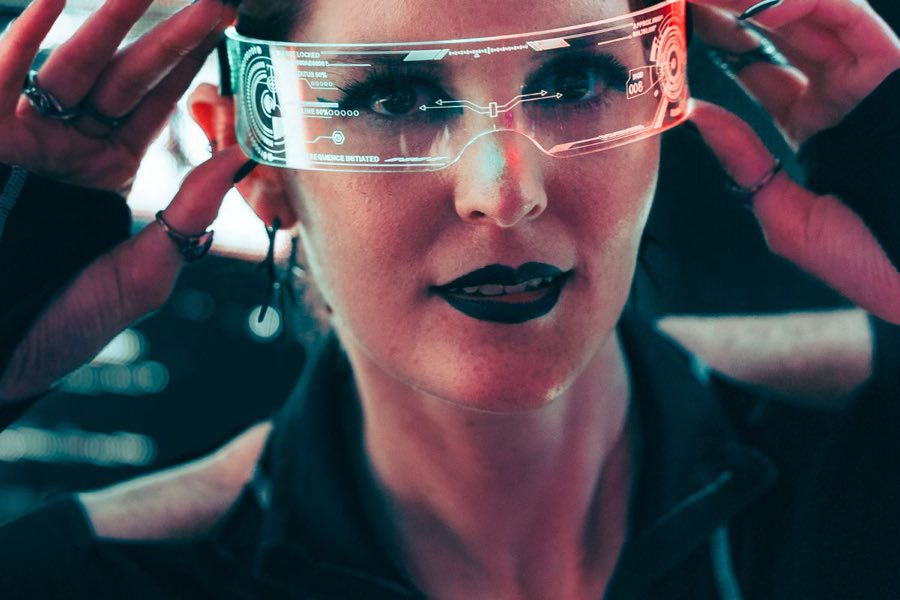
Samsung's Galaxy XR launched October 21, 2025 at $1,799, running Android XR, a platform co-built with Google, on a Qualcomm Snapdragon XR2+ Gen 2 chip paired with dual 3,552x3,840 micro-OLED displays running at up to 90Hz. Two days later, Unity announced general availability of Android XR support in Unity 6, powering several of the headset's launch titles from day one rather than arriving as a delayed platform add-on months after hardware launch, which is itself a meaningful signal about how seriously Unity is treating this platform relative to how XR platform support has historically rolled out.
The Hardware Specs That Actually Matter for Development
The Snapdragon XR2+ Gen 2 chip and dual micro-OLED displays are worth understanding in practical development terms, not just as marketing specifications. Micro-OLED displays at this resolution and refresh rate give considerably more headroom for fine visual detail and smooth motion than the LCD panels common in earlier-generation consumer headsets, which matters directly for any project where text legibility or fine UI detail is part of the experience, a common requirement for enterprise and productivity-adjacent XR applications specifically. The 90Hz refresh rate ceiling is also a meaningful constraint to design around from the start of a project rather than discover during optimization, since hitting a consistent 90 frames per second on mobile-class XR silicon requires the same disciplined performance budget thinking that mobile game development already demands, just at a higher baseline frame rate target than most mobile titles aim for.
What the OpenXR: Android XR Package Actually Adds
The Unity OpenXR: Android XR 1.13 package, available for Unity 6.5 Beta, adds Application SpaceWarp support specifically for uGUI and TextMeshPro, and this detail matters more than it might initially seem. SpaceWarp is a frame-generation and reprojection technique that helps maintain smooth motion perception even when the underlying render rate can't quite hit the display's full native refresh rate, and extending that support specifically to Unity's standard UI systems, rather than only to 3D world-space rendering, is meaningful for anyone porting an existing UI-heavy mobile project into a headset context rather than building an XR-native interface completely from scratch.
That distinction, UI-heavy mobile project versus XR-native interface, describes a real and growing category of project we expect to see more of as Android XR matures: not every headset application needs to reinvent its entire interaction model from zero, and having first-class support for porting an existing, already-validated UI system into a headset context lowers the barrier for a mobile-first studio to experiment with XR without committing to a completely new interface design discipline before even validating whether the underlying concept works in a headset at all.
Google's Cross-Engine Perception Hub
Google has also shipped an Android XR Engine Hub for Windows that unifies device-streamed perception data (the headset's understanding of the physical space around it, hand tracking, and environmental mapping) across Unity, Unreal, and Godot workflows simultaneously, rather than requiring engine-specific integration work for each. That cross-engine unification lowers the friction of prototyping on real hardware before committing to a full build pipeline meaningfully, since a team can validate a concept's core interaction model using whichever engine tooling they are most comfortable with, without the perception data pipeline itself becoming an engine-specific bottleneck during early prototyping.
For a small studio evaluating whether Android XR is worth prototyping for at all, this cross-engine tooling matters practically: it means the cost of a first prototype, purely to validate whether a concept translates well into a headset context, is lower than it would be if the perception pipeline itself required deep, engine-specific integration work before a team could even see their first interaction working on real hardware.
Is This Worth Prototyping For Yet?
The practical question for a mobile-first Unity studio evaluating a new platform is always the same: is this worth prototyping for now, or is it too early for the investment to pay off before the platform either matures further or fails to gain traction. Since existing AR Foundation projects port across to Android XR using the same underlying Unity XR package rather than requiring a separate, parallel codebase, the honest answer here is that a functioning AR Foundation project is most of the way to an Android XR build already. The barrier to trying it is considerably lower than it looks from the outside, and that changes the risk calculus meaningfully for any studio that already has AR Foundation experience or an existing AR project that could be adapted rather than rebuilt.
For a studio with no existing AR Foundation work, the calculus is a little different, since the first investment would be in the underlying AR Foundation architecture itself rather than purely in Android XR-specific work. Even in that case, though, the fact that AR Foundation and Android XR share so much underlying infrastructure means that investment is not narrowly scoped to a single, potentially short-lived platform; it pays off across Android XR, ARCore-based mobile AR, and any future Android XR hardware from other manufacturers that follows Samsung's lead, which meaningfully de-risks the initial investment relative to building for a truly single-platform, single-vendor XR target.
Our Own Evaluation Process
We have not yet committed a full production project to Android XR, but we have run a short internal prototyping exercise porting a simple AR Foundation demo into an Android XR build specifically to validate the porting story Unity and Google are describing here, rather than taking the marketing claims at face value. The port worked with meaningfully less friction than we expected going in, and that firsthand result is a large part of why we are recommending other AR Foundation-experienced studios take a serious look at this platform now rather than waiting for a second hardware generation to prove the platform's staying power first.
For client conversations specifically, Android XR now belongs in the initial platform scoping discussion for any XR brief that includes standalone, mobile-class hardware as a target, alongside Quest and Vision Pro. It is not yet the obvious default choice the way Quest is for reach or Vision Pro is for premium monetization, but a platform backed jointly by Google and Samsung, with day-one Unity support and a genuinely low porting cost from existing AR Foundation work, has earned a seat at that table faster than most new XR hardware platforms have historically managed.
The Enterprise Angle Worth Watching
Beyond the consumer and gaming angle covered above, Android XR's co-development between Google and Samsung, two companies with substantial existing enterprise software and hardware relationships, positions the platform for enterprise adoption in a way that a purely consumer-focused headset launch typically does not. For a studio doing XR development for hire, enterprise clients evaluating a training simulation, a spatial data visualization tool, or a remote collaboration application increasingly ask specifically about Android XR alongside the more established Quest and Vision Pro options, and having a real, tested answer about porting cost and platform maturity for this specific platform has already come up in more than one recent client scoping conversation.
We expect this enterprise interest to grow faster than the consumer gaming side of Android XR's adoption curve, precisely because Google and Samsung's existing enterprise relationships give the platform a distribution channel that a gaming-first headset launch would not have access to as readily. That is worth factoring into how a studio prioritizes its own Android XR investment: the near-term commercial opportunity may arrive from enterprise and productivity use cases before it arrives from consumer gaming at meaningful scale.
Comparing Android XR's Launch Trajectory to Vision Pro's
It is worth explicitly comparing Android XR's launch trajectory to Vision Pro's original 2024 launch, since the two followed noticeably different patterns that are instructive for predicting how Android XR's ecosystem might mature. Vision Pro launched with a smaller, more curated software catalog and a slower initial third-party developer ramp, reflecting Apple's characteristically controlled rollout approach. Android XR launched with day-one Unity support and immediate cross-engine tooling from Google, reflecting a more open, developer-access-prioritized rollout strategy consistent with Android's broader platform philosophy relative to Apple's more tightly controlled approach.
That difference in rollout philosophy suggests Android XR's third-party catalog could grow faster in raw volume than Vision Pro's did in its own first year, even if average revenue per app follows a different curve than the premium, smaller Vision Pro catalog has shown. We are watching this specific growth trajectory closely over the coming months, since a rapidly growing but lower-average-revenue catalog implies a different competitive dynamic for a new entrant than a smaller, higher-average-revenue one does, and that dynamic should shape how a studio times its own entry into this specific platform. We will revisit this specific growth comparison again once Android XR has a full year of real catalog and revenue data to compare against Vision Pro's own first-year trajectory, since a single quarter of launch data is suggestive but not yet conclusive on its own. For now, our concrete advice to any Unity-experienced studio curious about this platform is simple: if you already have AR Foundation experience, spend a single day porting an existing demo before deciding whether a full evaluation is worth your time, since that low-cost experiment will tell you more than any amount of reading roadmap announcements will. Our own internal Android XR prototype remains a living project we continue extending in small increments rather than a one-time experiment we ran once and shelved, precisely because we expect to reference it directly the next time a client brief raises this specific platform as an option worth real consideration.
Final Read: A Platform Worth Watching Actively, Not Passively
Stepping back from the individual technical details covered above, Android XR's day-one Unity support and low porting cost from existing AR Foundation work put it in a genuinely different category than most new XR hardware launches, which typically arrive with a longer gap between hardware availability and mature engine tooling. For a studio already invested in AR Foundation, that gap essentially does not exist here, and that alone is reason enough to keep this platform on our active radar rather than filing it away as a wait-and-see curiosity to revisit only once it has a full year of market data behind it. We would rather have run that internal test and be wrong about its implications than have skipped it and be repeating secondhand claims about a platform we had not actually verified ourselves. That is a deliberately low bar to clear before forming a real opinion, and we would encourage any studio evaluating this platform to clear the same bar themselves before deciding either way. We would rather ship that answer late than ship it wrong. That is our final word on it for now. Nothing more to add beyond that. That closes it out for now. Bookmark this specific comparison and revisit it before greenlighting any new headset-specific investment.
Weighing a new entrant like this against the two established headset ecosystems is covered directly in our Vision Pro vs Quest comparison. It's the same cross-platform scoping exercise we run on every XR development engagement that touches more than one headset.
Building something in XR?
AR, VR, and mixed reality builds for Quest, Vision Pro, and Android XR are a core part of our client work.
Explore XR Development